Last updated 2026-08-21
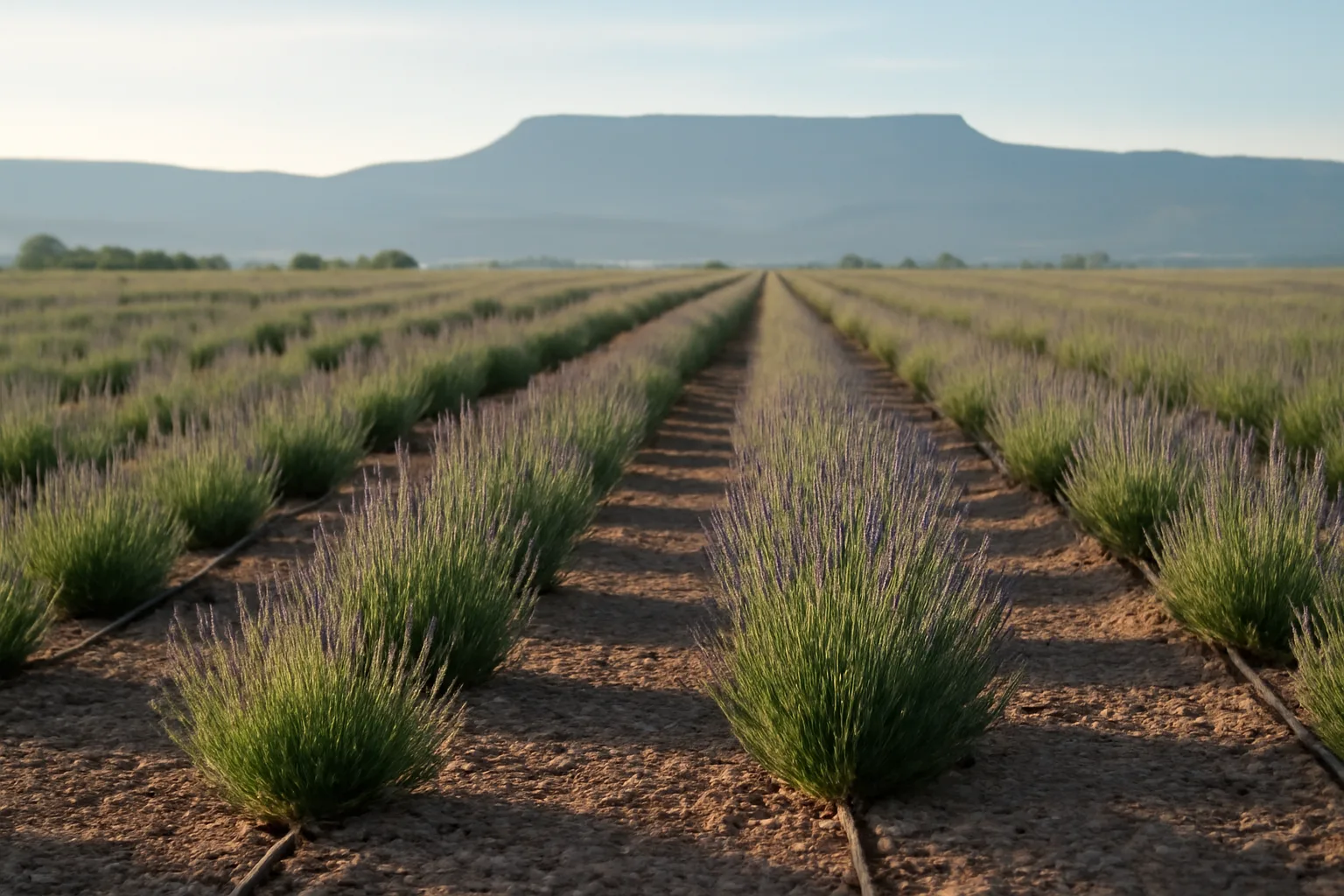
TL;DR
There is no lavender farm board in Colorado and no statewide lavender farm license. You work county zoning, a sales tax account if you sell, water rights or a well permit, plus CDA or CDPHE paper only if you sell plants or food. A real harvest usually starts in year two. Full production is often year three. Confirm fees with the office that bills you.
Is there a lavender farm board in Colorado?
No. Colorado runs no lavender farm board, no lavender commission, and no crop-specific license for planting lavender. People type that search because wine, cattle, and hemp have real state machinery. Lavender does not.
You still have paper. It lives in ordinary offices. County planning. The Colorado Department of Revenue. The Division of Water Resources. The Colorado Department of Agriculture, but only if you sell plants or spray certain pesticides. CDPHE, but only if you sell food.
If a consultant sells you a single Colorado lavender farm license, that product is fiction. Ask which statute creates it. They will not have one.
Call the county planner in the county where the dirt sits before you call anyone in Denver. Zoning is local. Every county writes its own land-use rules. A quiet production field in Montrose County and a u-pick on the Front Range are different animals.
That is the whole board story. There is no board. There is a stack you assemble yourself.
Do you need a license for a lavender farm in Colorado?
You do not need a statewide license to put lavender in the ground on land you already have the legal right to farm. Growing a hardy perennial as agriculture is, in most counties, ordinary farming. No crop card. No quota. No board interview.
You do need filings once money or the public shows up. Sell bunches, oil, or plants and you likely need a Colorado sales tax account with the Department of Revenue. [6] Invite cars for u-pick or a farm dinner and the county may want a special-use permit, an event permit, or both. Sell live plants and the Colorado Department of Agriculture nursery program applies. [4] Sell cookies, sugar, or other edible goods and you are in CDPHE cottage-food or wholesale-food territory. [3] Develop a well or change a water use and you are with the Division of Water Resources. [5]
People call all of that the license. It is not one license. It is a pile of ordinary credentials that attach to activities, not to the word lavender.
Colorado does not issue a statewide lavender farm license, and it does not operate a lavender farm board.
A wholesale dried-bud patch is not the same animal as a Saturday u-pick. The first can be almost invisible to the county. The second is a parking and restroom problem that planning staff will treat like a small business, not like a hayfield.
Confirm every trigger with the office that enforces it. I will not invent a fee or a wait time. Those numbers move.
What paperwork actually starts a Colorado lavender farm?
A workable year-one file is land control, a county land-use read, a lawful water story, and a tax account if you will sell anything. Entity papers with the Secretary of State are optional for a sole proprietor and useful if you want an LLC. Everything else waits on what you actually sell.
Start with the deed or lease. If the seller smiled and said you can irrigate, get the well permit number or the ditch share certificate in your hand. A verbal water story is not a water right. Read the CSU Water Knowledge pages on rights before you wire a closing deposit. [11]
Then sit with county planning. Bring a one-page sketch: field blocks, driveway, any tent, any restroom, any still shed. Ask whether a farm stand or u-pick is a use by right or a hearing. Ask whether agritourism is defined in the code. Write down the name of the person who answered you.
| Filing | Agency | When it shows up |
|---|---|---|
| Land use or special use | County planning | U-pick, events, new public structures |
| Sales tax account | Colorado DOR | Retail sales of goods |
| Well permit or water administration | DWR | New well or an administered right |
| Nursery registration | CDA | Live plant sales |
| Cottage or wholesale food | CDPHE | Edible products |
| Pesticide applicator | CDA | Restricted-use applications |
Sales tax is a Department of Revenue account, filed in their sales and use tax system. [6] You collect tax on taxable retail sales. Wholesale to a reseller can be different. Confirm the current rules on the DOR pages. Do not copy a 2019 blog.
IRS Publication 225 is the federal farm tax book. It says, in the agency's own words, "You are in the business of farming if you cultivate, operate, or manage a farm for profit, either as owner or tenant." [7] That sentence matters for Schedule F. It does not replace Colorado filings.
Building permits attach to structures, not to plants. A hoop house, a restroom, a still room with burners, and a gravel lot each can trip a different review. Fire districts care about distillation more than the plant board you do not have.
Open a cheap LLC only after you know the land and water are real. Filing an entity on a parcel you cannot irrigate is a waste of money.
Paper paths in other western states look similar on a slide and different on the ground. Arizona's stack leans even harder on water and county use. California's stack has more nursery and marketing machinery than Colorado will ever grow.
How much does a lavender farm cost in Colorado?
There is no official Colorado lavender startup price, and anyone who quotes one number is selling something. Land, water, fence, and irrigation dominate. Plants are the line item people obsess over, and on the Front Range they are not the expensive part.
USDA NASS publishes Colorado farm real estate averages each August in the Land Values report. [10] Read the current table. I am not going to reprint a year-old average here because it goes stale, and mountain recreation counties do not price like dryland eastern plains. A ten-acre view parcel outside Loveland is not an ag budget. A forty-acre hay ground in the San Luis Valley might be.
Closest published production guidance comes from other land-grant schools, not from a Colorado board. Penn State Extension's lavender production and marketing page is a decent orientation on spacing, stand life, and the kind of costs that show up on a crop. [12] It is not a bid for Palisade or Pueblo. Freight, deer pressure, and alkaline soils change the math.
Plants are usually a few dollars each as plugs or bands, more in gallon pots. Row spacing commonly lands you near a couple thousand plants per acre. I will not invent a per-acre plant total or a turnkey acre package price. Those social posts leave out drip filters, a real fence, and the three years you weed before oil pays a utility bill.
Here is what I would spend in year one on a small farm Colorado growers actually finish: a CSU soil test, a few hundred plants of two or three hardy English cultivars, drip on that block only, deer protection that works, and one paid hour with a water lawyer if the well permit looks thin. Skip the copper still. Skip the custom gate. Skip thousands of plants of a lavandin you have never wintered at 6,200 feet.
Waste of money, said plainly: a tasting room, a wedding pergola, a huge website, organic certification on a weedy new field, and any product that claims to include your county permit. Public bathrooms and accessible parking are real if you go u-pick. They are not year-one costs if you sell wholesale bunches from a farm gate by appointment.
The 2022 Census of Agriculture posts Colorado state and county tables for farms, land, and specialty categories. [14] Use it to see how small specialty growers actually show up in your county. Do not use it as a lavender profit sheet. The census does not run a lavender board either.
How long does a lavender farm take in Colorado?
A new planting is a two to three year crop, not a summer project. University of Vermont Extension's lavender fact sheet puts the first harvestable crop in year two and full production in year three. [2] Colorado weather can stretch that. Late freezes after a warm March will.
Year one looks like sticks and weeds. You plant in spring after the soil can be worked, or in early fall if your site is kind. You water to establish. You do not book a June u-pick. Anyone who tells you the field will be purple for paying guests the same year you plant is selling plants, not a farm.
Year two you should get a real bloom if the plants lived. It will not be your full stem count. Year three is when a well-kept English lavender block starts to look like the photos. Stands often hold for a decade if you do not drown the crowns or let grass take the rows. Confirm cultivar hardiness. CSU Planttalk 1045 is blunt about English lavender versus the tender types that die here. [1]
Permits do not run on the plant clock. A county special-use hearing follows that county's packet deadline and planning commission calendar. I will not quote a number of weeks. Miss the submittal date and you sit until the next hearing. Sales tax accounts are usually quicker than land use. Confirm inside the Department of Revenue system. No approval promise. No timing promise.
If you need a new well permit, DWR time is its own clock. [5] If you need a water-court change of use, think in a different unit. Months can become years. I would not buy plants on a closing date until I knew which clock I was on.
Oil in year one is a hobby yield. Buying a still on a year-one oil story is how people light money on fire. Wait until you have weighed a real year-two bloom.
Idaho's mountain-west path has the same winter and water honesty. Alaska's season is shorter still. Do not import a Hawaii timeline into Garfield County.
What does county zoning do to a u-pick or farm stand?
County zoning decides whether your lavender farm is a field or a public place. Growing and trucking wholesale stems is usually agriculture. Parking dozens of cars on a Saturday, selling tickets, and pouring lemonade is a business the planning file will notice.
Many Colorado counties have right-to-farm language. That language protects ordinary ag practices from nuisance complaints. It does not bless a concert, a wedding, or a permanent retail shop. Ask for the section in the county code. Do not assume ag zoning means open to the public.
Farm stands sit on a spectrum. A table at the gate a few weekends a year may be fine. A year-round shop with a new driveway cut onto a state highway can need a CDOT access permit plus a county building permit. I will not list CDOT fees. Confirm with Region staff if your access is on a state road.
U-pick adds restrooms, trash, accessibility, and sometimes a special-event permit for peak bloom weekends. Fire districts ask about tents. Health departments ask about water and food. That is a different conversation than CDA nursery staff will ever have with you.
Walk in with a boring site plan before you grade anything. Show the rows, the overflow park-on-grass idea, the porta-potty, the one portable sign. Ask what triggers a hearing. If they say conditional use, budget time and a neighbor-notice process. Do not plant the public parking lot in your head until that file exists.
Boulder, Jefferson, and Larimer staff see more land-use conflict than the Western Slope. That is not a moral judgment. It is traffic and parcel size. Price that into your site search. A Florida agritourism setup will not map onto a Colorado mountain county. Copy the questions, not the forms.
Do you need a Colorado water right or well permit?
Yes. You need a lawful water supply, not a hope and a creek. Colorado is a prior-appropriation state. The Colorado Constitution, Article XVI, Section 6, says: "The right to divert the unappropriated waters of any natural stream to beneficial uses shall never be denied." [8] That sentence is famous. It is not a coupon for a new irrigation well on a dry tributary.
Most small lavender farms irrigate from a permitted well, a ditch-company share, or (rarely) a municipal tap that allows irrigation. A new well takes a Division of Water Resources permit. [5] The permit can cap flow and acres. A domestic-only well often cannot legally water a commercial planting. Read the permit. Then read it again.
Buying water rights at closing without a decree, a share certificate, or a well permit number is how people buy dust. Changing the type or place of use of an existing right can require water court. That is lawyer work. I would not file that myself to save a fee.
Lavender hates wet feet and still needs August water on the Front Range. Drip is the usual answer. Overhead on clay is how you rot crowns. CSU's water-rights explainers are the plain-language version of this. [11]
Walk from a parcel whose only irrigation story is that the neighbor has a hose. Drought years get ugly when a junior right is curtailed. DWR administers that reality every summer. [5]
When does the Colorado Department of Agriculture get involved?
The Colorado Department of Agriculture gets involved when you sell nursery stock, apply certain pesticides, or sell by measure in ways that trigger Measurement Standards. It does not license being a lavender farm.
Sell live lavender plants and you are in the nursery program. Register with CDA Plant Industry and follow the Nursery Act rules they post. [4] I will not quote a fee. Fees change. Confirm on the nursery page.
Spray a restricted-use pesticide and you need the applicator credential CDA runs. [9] Many small lavender farms never go there. Hand weeding is more common than a spray program on a few thousand plants. If you do spray, store and record like they ask. Do not invent a homemade mix and hope.
Measurement Standards matters if you sell oil by fluid ounce or buds by weight in retail and you cross the kinds of sales they regulate. Confirm with that unit. It is not romantic. It is a scale sticker.
Colorado Proud is a marketing membership, not a farm license. Organic certification is a real USDA process. I would not start organic in year one on a site that still has bindweed and a thin stand. You will pay to document weeds.
There is no CDA lavender inspection, no bloom calendar filing, and no cultivar registry. Anyone implying otherwise is importing hemp rules into the wrong crop.
Can you sell lavender food, oil, and plants from the same farm?
You can sell dried bundles, essential oil, and live plants from one farm. You cannot pretend they share one rulebook.
Edible products sit with CDPHE. The Cottage Foods Act lets producers sell certain non-potentially hazardous foods direct to consumers, with training and labeling, without a wholesale facility license. [3] Confirm the current allowed list and any sales limit with CDPHE. I am not printing a cap that may have changed. Lavender sugar and some baked goods often fit. A chilled lavender lemonade usually does not, because time and temperature control matter. When in doubt, ask CDPHE, not a Facebook group.
Essential oil sold as fragrance is not a cottage food. Put that oil into something people eat and food rules attach. Make drug claims on a bottle and you have a federal problem that no county planner can fix. Keep labels boring.
Live plants are nursery stock. That is CDA. [4] A u-pick customer digging a plant to take home is a plant sale. Plan for that.
Pick one revenue line for year two and add the others after the paper is clean. Three product types in month six is how you collect three warning letters.
If you want a single checklist of cultivar, distill, and u-pick tasks, LavenderKit's $149 Cultivar + Distill + U-Pick Kit is a workbook we publish. It is not a Colorado credential, and we are not a service company. The agency pages cited here are the source of record.
What insurance and liability rules apply to agritourism?
Colorado has an agritourism liability statute, C.R.S. 13-21-121. It limits some liability for injuries from inherent risks of agritourism when you give the required warning. It does not make you judgment-proof. It does not replace a farm liability policy with a u-pick or agritourism endorsement.
Buy the policy, then read the statute. A printed statute in a binder is not insurance. Confirm the current warning language before you post a sign. I am not your lawyer.
Hire anyone and Colorado agricultural labor rules are no longer the old federal-only story. SB21-087 changed farmworker conditions, including overtime structure. [13] Confirm current CDLE guidance. Family-only labor is a different fact pattern. Do not assume your cousin is exempt because you said farm.
Weddings on ag land are a zoning problem first and an insurance problem second. The statute will not save a venue you were not allowed to operate.
Waste of money: an umbrella policy on a use the county can shut down. Get the land use right, then bind coverage.
What would I skip in year one on a Colorado lavender farm?
I would skip the still, the venue, the full multi-acre plant order, organic paperwork, and any building a guest will enter. I would not skip the county conversation, the water paper, or a small cultivar trial.
Plant two or three hardy English types CSU actually discusses, not twelve photo cultivars. [1] Weed them. Weigh the year-two bloom. Then decide if oil or u-pick is even the business.
A fancy gate does not keep deer out. A real fence does. On foothill sites I would budget fence before I budget a logo.
Do not hire a marketing firm in year one. You will have nothing purple to photograph. Do not promise school tours. Do not take wedding deposits on a field of plugs.
If you need a comparison for how thin a first year can be in a hard climate, read the Alaska license and timeline writeup next to this one and stay honest about frost.
How do you confirm facts with the right Colorado office?
Call the office that can say no. County planning for land use. DWR for wells and administration. DOR for sales tax. CDA Plant Industry for nursery and pesticides. CDPHE for food. CDLE if you hire. Your county assessor if you care about ag classification for property tax. I will not promise you ag classification. Assessors apply their statutes to your facts.
Ask for the form name, the current fee, and the next hearing date. Write it down. Do not rely on a 2022 PDF you found in a forum.
No one in this article can guarantee approval or a clock. Fees change. Quotas are not a lavender thing here because there is no board to set one.
When you are done reading, use the public pages. If you also want our workbook, it lives at /start. That is the last you will hear about us. The farm still has to pass the county.
Frequently asked questions
Do you need a license for lavender farm in Colorado?
No statewide lavender license exists. Growing on land you may legally farm does not take a crop card. You need other filings when you sell goods (sales tax), sell plants (CDA nursery), sell food (CDPHE), invite the public (county), or develop water (DWR). Confirm each trigger with that office. Nobody issues a single lavender farm permit.
How much does lavender farm cost in Colorado?
There is no official Colorado figure. Land, water, fence, and drip usually dwarf plant cost, especially near the Front Range. USDA NASS posts a state farm real estate average each August. Other land-grant pages describe plant spacing and stand life. I would trial a few hundred plants before I bought acres of plugs. Ignore turnkey prices on social media.
How long does lavender farm take in Colorado?
Plan on year one as establishment, year two as the first harvestable bloom, and year three as full production, which matches land-grant production pages. County hearings and water-court changes run on their own calendars. I will not quote a permit week count. A same-year u-pick on a new planting is not a real plan.
Is there a Colorado lavender commission or checkoff?
No. There is no commodity commission, checkoff, or mandatory producer assessment for lavender in Colorado. Marketing groups are voluntary. Colorado Proud is optional marketing through CDA, not a license to farm. Do not pay anyone who implies a state lavender quota exists.
Can I distill lavender oil without a special state license?
Colorado does not issue an essential-oil farm license. Distillation still trips building, fire, and occupancy rules if you put a still in a structure or invite the public. Edible uses pull in food rules. Confirm fire-district and county building requirements before you fire a burner. Keep health claims off the label.
Do dried culinary buds need cottage food paper?
Once you sell an edible product, CDPHE rules apply. Cottage foods cover certain non-potentially hazardous foods sold direct, with training and labels. Confirm whether your exact product is on the current allowed list. A wholesale lot to a grocer is a different license. Ask CDPHE, not a craft group.
Will a domestic well cover a one-acre lavender field?
Often no. Many domestic well permits limit use and irrigated area. Commercial irrigation can sit outside that permit. Read the actual DWR permit. If you need a new or changed right, file with DWR or talk to a water attorney. A hose from a house well is not a plan.
Can I hold weddings on my lavender field?
Only if county zoning allows that use and your insurance matches it. Agritourism statutes do not override zoning. Weddings are events, not row-crop agriculture. Expect hearings, parking review, and restroom requirements in many counties. Do not take deposits until planning staff puts the use in writing.
Do I need wage filings for one summer hire?
If you hire, Colorado labor and workers' compensation rules can attach. SB21-087 changed agricultural labor standards. Confirm with CDLE and your insurer. Unpaid family labor is a different fact pattern. Do not guess. A handshake and cash still count as employment when they count.
What lavender types survive Colorado winters?
English lavender (Lavandula angustifolia) is the usual hardy choice. Tender lavenders and some lavandins die in cold or wet shoulder seasons. CSU Planttalk 1045 is the local garden-level reference. Trial on your soil before you plant a whole acre of one named cultivar.
Does agricultural property tax happen automatically?
No. County assessors classify land under Colorado property-tax statutes. A few rows of lavender on a residential lot may not qualify. Acreage, use, and income facts matter. Ask the assessor how they treat specialty perennials. I will not promise an ag classification.
Where do I register sales tax for farm-gate sales?
The Colorado Department of Revenue. File a sales tax account through their current sales and use tax system. Confirm which sales are taxable. Wholesale to a licensed reseller can differ from retail u-pick. Do not copy a fee from an old blog. Read the DOR page the week you file.
Is organic certification required for a farmers market?
No. Markets set their own vendor rules. Organic is a USDA claim you may not use until you are certified, with a narrow exemption for very small producers under the National Organic Program. Conventional lavender can sell if the market allows it. Do not print organic on a craft label to sound nicer.
Sources
- University of Vermont Extension, Lavender fact sheet: Land-grant production guidance puts the first harvestable lavender crop in year two and full production in year three.
- Colorado Department of Public Health and Environment, Cottage Foods Act: The Cottage Foods Act allows certain non-potentially hazardous foods to be sold direct to consumers with training and labeling, without a wholesale facility license.
- Colorado Department of Agriculture, Nursery program: Selling live lavender plants in Colorado falls under the CDA nursery program, not a crop-specific lavender license.
- Colorado Division of Water Resources, Well permitting: A new well in Colorado requires a Division of Water Resources permit, and permit terms can limit flow and irrigated use.
- Colorado Department of Revenue, Sales and use tax: Retail sales of tangible goods, including farm-gate lavender products, are handled through a Colorado Department of Revenue sales tax account.
- Internal Revenue Service, Publication 225 Farmer's Tax Guide: IRS Publication 225 defines being in the business of farming as cultivating, operating, or managing a farm for profit as owner or tenant.
- Colorado General Assembly, Colorado Constitution: Colorado Constitution Article XVI, Section 6 states that the right to divert unappropriated waters of any natural stream to beneficial uses shall never be denied.
- Colorado Department of Agriculture, Pesticides program: Restricted-use pesticide applications in Colorado require CDA applicator credentials.
- USDA NASS, Land Values 2024 report: USDA NASS publishes Colorado farm real estate averages each August in the Land Values report.
- Colorado State University, Water Knowledge water rights: Colorado water rights follow prior appropriation, and a closing-table story is not a substitute for a decree, share, or well permit.
- Colorado General Assembly, SB21-087 Agricultural Workers' Rights: SB21-087 changed Colorado agricultural labor standards, including overtime structure, for hired farm labor.
- USDA NASS, 2022 Census of Agriculture Colorado state profile: The 2022 Census of Agriculture publishes Colorado state and county farm statistics, including specialty-crop categories.