Last updated 2026-08-21
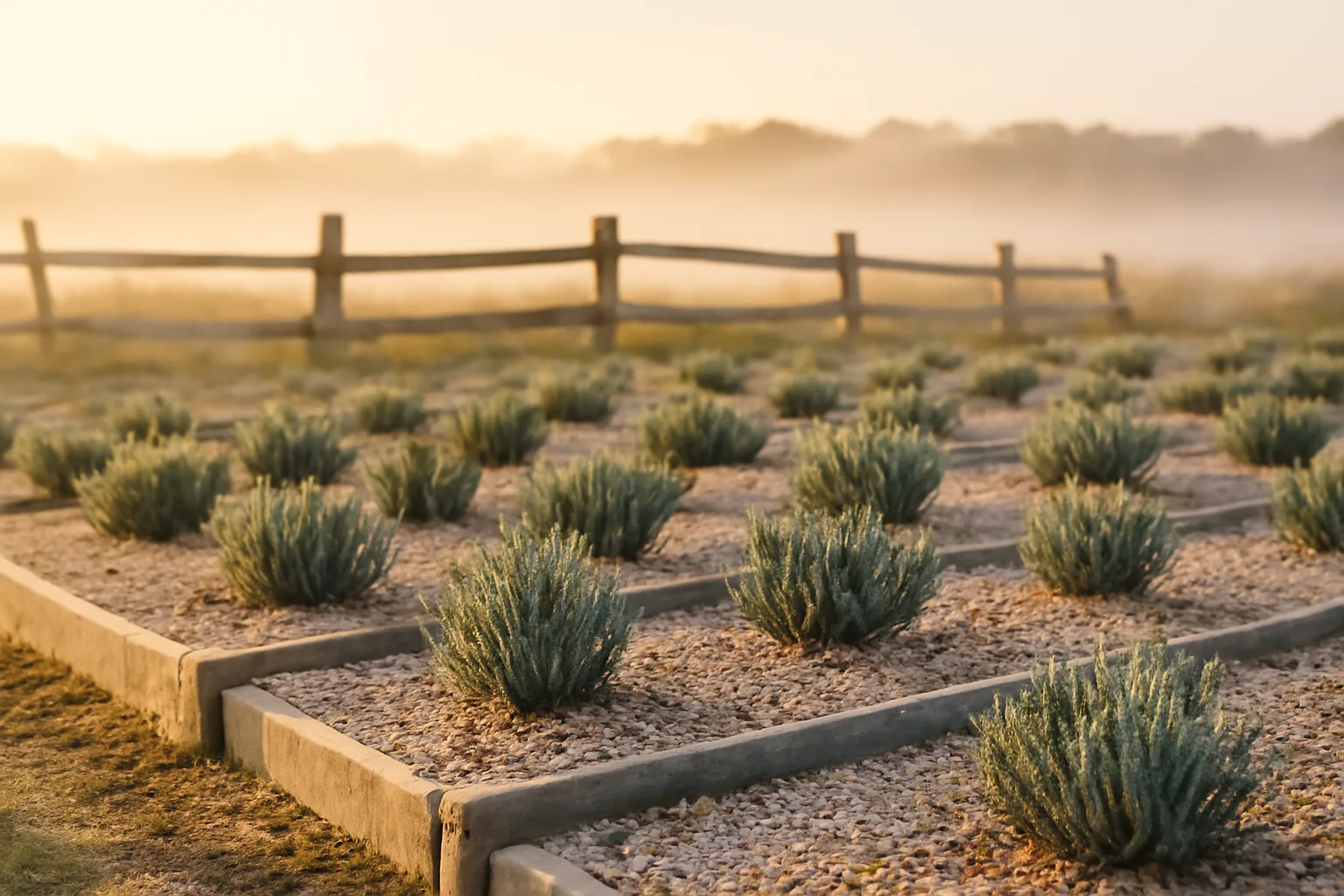
TL;DR
If you already own usable ground, plan on a mid five-figure outlay for about 1 acre of plants, beds, drip, and fence. Buying land changes everything. USDA put U.S. farm real estate at $4,170 an acre in 2024. Delaware runs much higher. You need a Division of Revenue business license. Other paper depends on plants, food, and public visits. Harvest is a 2 to 3 year wait.
How much does a lavender farm cost in Delaware?
If you already own well-drained ground, a small first planting of about one acre in Delaware often lands in the mid five figures once you pay for plants, raised beds, drip, and deer fence. Buying land is a different project. USDA NASS put U.S. farm real estate at $4,170 per acre in 2024. [1] Delaware's state row in that report sits far above the national average, so a purchased parcel can dwarf every other line on the spreadsheet.
Nobody publishes a Delaware lavender enterprise budget. The closest public numbers are those land values, the Census farm count, and national production notes such as ATTRA's lavender publication. [2][9] You build a real budget from nursery quotes, a well driller, a fencer, and your county permit desk. Anyone selling you one statewide startup figure is guessing.
I would not start at ten acres. I would start with a few hundred plants, a soil test, and a written zoning answer from the county. Dead plants in year one are common here. Humidity and wet feet kill more lavender in the Mid-Atlantic than cold does. A full-acre plant order before you have seen a Delaware August on that soil is how you light money on fire.
If you add a still, a pole barn, restrooms for U-pick, or paved parking, you leave the five-figure band. Those are optional. Plants and drainage are not.
A clean planning range for a 1-acre planting on land you already control is roughly $15,000 to $50,000 before buildings. The spread is mostly fence length, how wet the site is, and whether you buy large plants or cheap plugs. Keep a replacement reserve. You will use it.
What does farmland itself cost in Delaware?
Land is the line that breaks most Delaware lavender plans. The 2022 Census of Agriculture counted 2,151 farms in Delaware and 525,259 acres in farms, with an average size of 244 acres. [2] That is a poultry and grain state. Lavender does not show up as its own line in those tables. You are bidding against houses, chicken houses, and corn.
USDA NASS reported that U.S. farm real estate value "averaged $4,170 per acre for 2024, up 5.0 percent from 2023." [1] Open that same PDF and read the Delaware row before you make an offer. I am not going to freeze last year's state figure as if it were a current asking price.
New Castle County ground near the I-95 corridor often prices like development land. Sussex carries beach and poultry money. Kent is frequently the less painful middle, and it is still not cheap. A two-acre hobby tract with a pretty barn can cost more per acre than an 80-acre grain tract inland.
For lavender you need internal drainage more than you need acreage. A high, sandy ridge in western Sussex or central Kent beats a scenic low field along a ditch. Walk the site in February, not in June. If you already own the land, skip the panic in this section and go argue with your soil test.
Do you need a license for a lavender farm in Delaware?
Yes. If you sell, you need a Delaware business license from the Division of Revenue. Title 30, Chapter 23 is the occupation license chapter. [3] Title 30, Chapter 29 is the gross receipts tax chapter that rides with many of those licenses. [4] Delaware has no general sales tax. You still license the business and you still report gross receipts. File through the state's business portal and confirm the current fee for your activity code. [10]
Selling potted lavender or other nursery stock points you at Delaware Department of Agriculture nursery rules under Title 3, Chapter 13. [5] Confirm the current grower or dealer category and fee with Plant Industries. Do not copy a fee from an old forum post.
Selling only cut stems you grew, from the farm, is usually simpler than selling plants. Simpler is not the same as no paper. You still have the business license. County zoning still applies if customers drive onto the property.
Food is a different door. Lavender lemonade, cookies, or packed tea can pull you into Division of Public Health food rules. Distilled oil sold as a beauty product sits under federal cosmetic law. [13] Confirm both paths before you print a label.
Zoning is local. Three counties, plus a town if you sit inside a municipal limit. A quiet field may be fine in an agricultural zone. A Saturday U-pick with parking and a stand may need a special use or a site plan. Ask the county planner in writing. Keep the email.
What other first-year permits should you expect?
Plan on a county conversation before you order plants. If you invite the public, ask about parking, driveway sight lines, restrooms, signs, hours, and whether agritourism is a permitted use on your parcel. Those answers change cost more than a potting bench does.
A new irrigation well goes through DNREC. Confirm the permit path and construction standards with the Water program. Do not assume a household well legally covers a field drip system. If you already have a strong well, you may only need a pump and filtration. That is a big cost swing. Confirm it.
If you put up a barn, a public restroom, or a hoop house over a size threshold, you are in building code. Counties differ. A pop-up tent on Saturdays is not the same project as a permanent shop.
IRS Publication 225 is the farmer's tax guide. It is how you decide if this is a farm for federal tax purposes. [7] Publication 225 says, "You are in the business of farming if you cultivate, operate, or manage a farm for profit, either as owner or tenant." Get a farm number from FSA if you want USDA programs later. That number does not cost money. It is not a license to sell.
I would call the county, then Revenue, then DDA. Then I would spend money on plants. Paper first looks slow. Replanting a denied U-pick is slower.
| What you do | Paper to check | Who to ask |
|---|---|---|
| Sell cut stems from the farm | Business license, zoning | Division of Revenue, county |
| Sell potted plants | Nursery grower or dealer license | DDA Plant Industries |
| U-pick or on-farm events | Zoning, parking, restrooms | County planning, insurer |
| Cookies, lemonade, tea | Food establishment or cottage path | DPH Food Protection |
| Oil as a cosmetic | Labeling and cosmetic rules | FDA, plus state tax license |
How long does a lavender farm take in Delaware?
From a spring planting of plugs, expect almost no crop the first season, a light harvest the second, and a more honest yield in year three if the plants live. The paper can move faster than the plants. A complete business license filing can be relatively quick. Confirm current processing with Division of Revenue. No article should promise you a number of days.
Zoning is the slow variable. A by-right agricultural use can be a short counter visit. A special use for events can run a full hearing calendar. I will not invent a week count. Ask your county for the present schedule and fee.
Plant clocks do not care about your loan closing. English lavender and lavandin both need a full season to set roots. Delaware winters are rarely the limiter. Wet soils and July humidity are. Budget a replacement rate. Mid-Atlantic growers often plan to replant a slice of the field after a bad winter-wet year. That is regional practice, not a Delaware trial plot.
If you need income in month six, this crop will not provide it. Keep the off-farm job through year two at least. Bloom photos are not a cash-flow statement.
Wholesale bunches and U-pick both need a field that looks finished. That look arrives after the plants bulk up, not after the first green flush.
What should you budget for plants, beds, water, and fence?
Plant density for field lavender commonly runs about 1,200 to 2,800 plants per acre, depending on spacing and whether you leave harvest alleys. ATTRA's lavender production publication is the public primer most new growers still get handed. [9] Commercial plugs and liners price in a wide band, from a few dollars to well over $10 for larger pots. Get three nursery quotes. Box-store landscape lavender is a waste if the plant is a tender hybrid or a mislabeled mix.
Drainage work is the Delaware tax. Raised beds, a gravel mulch, and a site that sheds water matter more here than they do in a dry-summer state. A University of Delaware soil test is cheap and it stops you from guessing lime and phosphorus. [11] I would not plant without one.
Drip is the right irrigation. Overhead keeps foliage wet. Wet foliage in July is how you buy fungus. A well, a pump, and mainline can exceed the cost of the drip tape itself. Confirm well rules before you trench.
Deer will wreck buds and a U-pick Saturday. An 8-foot woven perimeter is ugly and expensive, and I would still budget it in most of Kent and New Castle. Electric tape alone is a hope, not a plan. Sussex deer pressure varies. Walk neighboring fields and look at browse.
| Line (about 1 acre, land already owned) | Planning range | What moves it |
|---|---|---|
| Plants | $6,000 to $20,000 | Count and pot size |
| Beds, gravel, drainage | $3,000 to $12,000 | How wet the soil is |
| Drip plus pump hardware | $1,500 to $6,000 | Whether a well exists |
| Deer fence | $4,000 to $20,000 | Linear feet of perimeter |
| Simple sales setup | $500 to $5,000 | Table versus a small shed |
These are planning ranges, not a published Delaware survey. Your invoices will argue with them. That is fine.
Is Delaware humidity a budget problem or a deal breaker?
You can grow it, and you will work harder than a grower in a dry-summer climate. Delaware sits mostly in USDA Plant Hardiness Zones 7a and 7b. Check your exact parcel on the ARS map. [8] Southern coastal spots may read warmer on the 2023 map. Hardiness is not the problem. Humidity and poor internal drainage are.
Lavandula angustifolia wants a dry shoulder. You can give it that with gravel, spacing, and a high site. I would trial several cultivars in year one instead of betting the whole order on one pretty name. Intermedia types (lavandin) often hold up better in heat. They are not the same oil profile. Decide what you are selling before you fall in love with a flower.
If your site ponds in February, pick another site. Tile and raised beds can fix a mild problem. They will not fix a swamp. That is the cheapest advice in this article.
ATTRA treats lavender as a field crop and as an entertainment farm. [9] Read it for spacing and product ideas. It will not drain your clay for you.
How do U-pick, bunches, and oil change the cost?
Cut bunches and dried buds have the lowest extra cost. You need rubber bands, a dark dry space, and a way to take payment. U-pick adds parking, a farm liability policy with an agritourism conversation, toilets, and people on site. Oil adds a still, fuel, a clean workspace, and a label you can defend.
I would not buy a still until I had two harvests and a place to put the biomass. A still is a fun invoice. It does not create flowers.
If you sell oil as a beauty product, federal cosmetic rules apply. [13] "I cooked it on the farm" is not a label. If you sell food, talk to DPH before the first batch.
LavenderKit's $149 Cultivar + Distill + U-Pick Kit is a one-time packet if you want those checklists in one place (/start). This article still works if you never click that.
A farm stand in Delaware does not add state sales tax collection, which surprises people who moved from Maryland. You still track gross receipts. [4] That is the trade.
How does Delaware lavender farm cost compare with other states?
Delaware's special cost hit is high land plus humidity-driven plant loss. You do not collect state sales tax at the table, which is a real break next to neighboring states. You do pay gross receipts tax. [4] Confirm the rate for your code.
If you want other state paper paths, read the guides on lavender farm cost in Connecticut, lavender farm cost in California, and lavender farm cost in Colorado. Humid-state notes in lavender farm cost in Florida, lavender farm cost in Georgia, and lavender farm cost in Alabama will feel familiar. Lavender farm cost in Illinois is a reminder that grain-country land math is not flower math.
California land can make Delaware look polite. Colorado altitude dries the air and then hands you a winter and a water right. I would rather fight Delaware humidity on sandy ground than fight a desert well story. That is a preference. It is not a profit forecast.
What taxes hit a Delaware lavender farm?
Delaware does not charge a general sales tax. Your customers do not pay one at the bunch table. You still get a business license and you pay gross receipts tax on receipts in the class Revenue assigns. [3][4][10] Confirm the current rate for your license code. Rates live in Title 30 and in Revenue's instructions. They get amended. I will not freeze a percentage in this article.
Agricultural use valuation can cut the property tax bill if the parcel meets Title 9, Chapter 83. [6] Read the current acreage and income tests in the code. A tiny ornamental plot may not qualify. Confirm with your county assessment office. Planting lavender does not, by itself, flip the tax class.
Federal treatment runs through Schedule F when you are farming for profit. Publication 225 is the manual. [7] A string of losses with no change in method starts to look like a hobby. Keep books from day one, even if day one is 400 plants.
NRCS EQIP sometimes cost-shares irrigation or other conservation practices. [12] It is competitive. It is not a lavender grant. Ask the Delaware NRCS office what is actually open this year. Do not budget an EQIP payment you have not been offered.
What would I spend if I already owned one sandy acre?
If I already owned a high, sandy acre in Kent or western Sussex, I would spend on a soil test, raised beds, drip, a real deer fence, and 400 to 800 plants, not 2,500. That is a test block you can actually weed. I would skip the still, skip the wedding venue, and skip branded merch.
Cash I would expect to write down: a few hundred for the test and amendments, a few thousand for beds and drip, fence as the painful line, plants in the low thousands. I would keep a reserve equal to half the plant bill for replacements. I would not quit a job.
If I had to buy the acre, I would run the NASS land table and a set of closed comps first. [1] Many lavender plans die on the closing statement, not in the field.
Public visitors wait until year two, when I know the plants lived and the county has said yes in writing. Year one is dirt work and watching what dies.
Where do first-year Delaware growers waste money?
Big stills in year one. Imported mature plants at high-teens per pot for a full acre. Gravel parking lots before you have blooms. Wedding marketing. A farm-store build-out in a county that has not approved retail. Cheap landscape lavender that turns out to be the wrong plant.
Also a waste: copying a Sequim, Washington field layout onto a wet Delaware flat. That climate is not this climate. Wide rows and gravel here are not an aesthetic. They are how plants breathe.
Spend on drainage, fence, and the county zoning letter. Everything else can wait for a bloom you can cut.
LavenderKit is an independent publisher, not a law firm and not a service company. Confirm every fee and form with the Division of Revenue, DDA, DPH, DNREC, and your county. No article can lock a current board fee or a processing clock. If you want the checklist packet after you have read the statutes, it is at /start.
Frequently asked questions
Do you need a license for lavender farm in Delaware?
Yes if you sell. You need a Division of Revenue business license under Title 30. Potted plants add a DDA nursery license under Title 3, Chapter 13. Food and cosmetics open other doors. County zoning applies if the public comes on site. Confirm current categories and fees with those boards. A backyard planting you never sell is a different story.
How much does lavender farm cost in Delaware?
If you already own drained land, a small about-1-acre start often sits in the mid five figures for plants, beds, drip, and deer fence. Buying land dominates because Delaware farm real estate sits well above the 2024 U.S. average of $4,170 an acre reported by USDA NASS. Buildings and stills are extra. Nobody publishes a Delaware lavender budget.
How long does lavender farm take in Delaware?
Plants give almost no harvest in year one, a light cut in year two, and a more honest yield in year three if they live. A complete business license filing can be relatively quick. Confirm processing with Revenue. Zoning for U-pick can take a full hearing cycle. Confirm that clock with your county. No one can honestly lock those dates for you.
Is Delaware too humid to grow English lavender?
No, but humidity and wet soils kill more plants here than cold does. Delaware is mostly USDA zones 7a and 7b. Raised beds, gravel, drip instead of overhead, and a high site matter more than hardiness. Trial several cultivars before you plant a full acre. A February ponding site is a no, not a drainage project.
Do I charge sales tax at a Delaware farm stand?
Delaware has no general sales tax, so customers do not pay one on a bunch. You still need a business license and you still report gross receipts tax under Title 30, Chapter 29. Confirm your activity code and current rate with the Division of Revenue. Neighboring-state habits do not apply at the table.
Can I sell potted lavender without a nursery license in Delaware?
If you sell nursery stock, plan on a Delaware Department of Agriculture nursery grower or dealer license under Title 3, Chapter 13. Cut stems you grew are a different product than potted plants. Confirm the category that matches what you will actually sell. Do not take fee amounts from old posts. Ask Plant Industries.
How many lavender plants fit on one Delaware acre?
Field plantings commonly run about 1,200 to 2,800 plants per acre once you set spacing and harvest alleys. Wider spacing helps air flow in this humidity. Get a density from the cultivar and from how you will cut, not from a pretty photo. ATTRA's lavender production publication is the usual public starting point for layout.
Can a 2-acre lavender plot get farmland assessment in Delaware?
Maybe not. Agricultural use valuation lives in Title 9, Chapter 83. The code sets acreage and income tests. A tiny ornamental plot can fail them. Read the current sections and ask your county assessment office before you budget a lower tax bill. Planting lavender does not automatically change the class.
Which Delaware county is cheaper for a small farm?
Kent is often the less painful middle. New Castle prices like the I-95 corridor. Sussex mixes beach money and poultry ground. Inland sandy ridges beat scenic wet flats for lavender. Walk February water, then look at comps. County choice is drainage and neighbors as much as the sticker.
Do I need a food permit for lavender cookies or lemonade?
Often yes. Once you leave raw agricultural product and start baking, mixing drinks, or packing tea, you are in Division of Public Health food rules. Cottage versus food-establishment paths depend on what you make and where you sell it. Confirm with DPH Food Protection before the first batch. Do not print labels first.
What insurance do I need for a Delaware U-pick?
Talk to a farm insurer about general liability and an agritourism or premises conversation before you advertise Saturdays. County zoning, parking, and restrooms sit beside the policy, not inside it. I would not open the gate on a homeowner policy and a hope. Get the exclusion list in writing.
Should I buy a still in year one?
No. A still does not create flowers. Buy plants, drainage, and fence first. Wait until you have had two harvests and a clean place to put biomass. Oil sold as a cosmetic also pulls in federal labeling rules. Year-one stills are a common way to spend money you will wish you had for replacements.
Can NRCS help pay for drip irrigation in Delaware?
Sometimes. EQIP can cost-share conservation practices, including some irrigation work, but it is competitive and it is not a lavender grant. Ask the Delaware NRCS office what is open this year. Do not put an unoffered payment in your startup budget. Drainage design still has to fit lavender, more than the practice standard.
Does a home lavender garden become a farm for the IRS?
Only if you are farming for profit. IRS Publication 225 says you are in the business of farming if you operate or manage a farm for profit as owner or tenant. Schedule F and a string of unchanged losses are how that story gets tested. Keep books. A pretty hedge is not a farm.
Sources
- USDA NASS, Land Values 2024: U.S. farm real estate averaged $4,170 per acre for 2024, up 5.0 percent from 2023
- USDA NASS, 2022 Census of Agriculture Delaware Table 1: Delaware had 2,151 farms, 525,259 acres in farms, and an average farm size of 244 acres in 2022
- Delaware Code Title 30, Chapter 23 (occupational licenses): Delaware requires an occupation business license under Title 30, Chapter 23 for licensed trades and businesses
- Delaware Code Title 30, Chapter 29 (merchant gross receipts): Delaware imposes gross receipts tax on licensed merchant activity under Title 30, Chapter 29
- Delaware Code Title 3, Chapter 13 (nurseries and nursery stock): Delaware nursery grower and dealer rules for nursery stock are in Title 3, Chapter 13
- Delaware Code Title 9, Chapter 83 (agricultural land valuation): Agricultural, horticultural, and forest land use valuation tests are set in Title 9, Chapter 83
- IRS Publication 225, Farmer's Tax Guide: You are in the business of farming if you cultivate, operate, or manage a farm for profit, either as owner or tenant
- USDA ARS Plant Hardiness Zone Map: Delaware parcels fall mostly in Plant Hardiness Zones 7a and 7b on the official ARS map
- ATTRA/NCAT, Lavender Production, Products, Markets, and Entertainment Farms: ATTRA publishes public production, product, and entertainment-farm guidance for lavender, including field layout basics
- State of Delaware First Steps business portal: Delaware routes new business license filings through the state's First Steps business portal
- University of Delaware Cooperative Extension soil testing: University of Delaware Cooperative Extension runs a soil testing program growers can use before planting
- U.S. FDA, FDA Authority Over Cosmetics: Cosmetic products are federally regulated even when they are not pre-approved by FDA